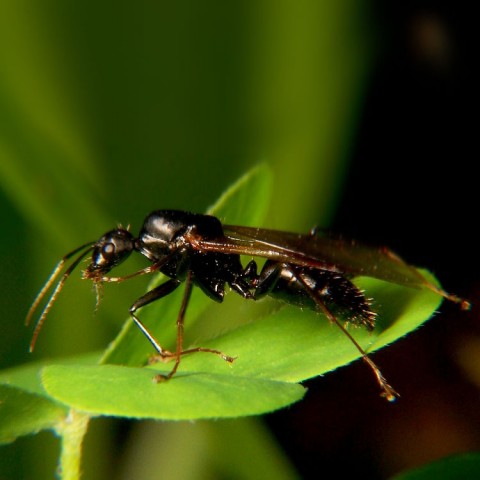
Short answer: Formosan subterranean termites (Coptotermes formosanus) are an invasive species that entered the continental United States through Charleston, South Carolina in the mid 1950s. They are more dangerous than native subterranean termites because their colonies are far larger, often reaching several million workers with a foraging range near 300 feet. More workers means more termites feeding on a structure at once and more chances to find a gap in a treatment.
One correction worth making early: individual Formosan termites are not resistant to termiticides and they do not eat faster than native workers. Clemson University entomologists are direct about this. The threat comes from colony size and foraging pressure, not from some special toughness in the insect itself.
1950s
Formosan termites first reach the U.S. mainland in Charleston
8 Million
Workers possible in a single mature colony
300 Feet
Foraging range of one colony
Since 1975
Ledford’s has treated Lowcountry termites
If you live in Charleston, Mount Pleasant, West Ashley, James Island, Johns Island, Summerville or Goose Creek, Formosan termites are not a distant news story. They are a local fact. Ledford’s has been inspecting and treating Lowcountry structures since 1975, and Formosan activity is something our technicians document in this market week after week.
Key Facts at a Glance
- Formosan subterranean termites are established in roughly 16 South Carolina counties, including Charleston, Berkeley, Dorchester, Colleton, Georgetown, Richland and Lexington.
- Formosan swarmers are about half an inch long and golden brown. Native subterranean swarmers are about three eighths of an inch and dark.
- Formosans swarm at night from roughly May through July and gather around exterior lights. Native subterraneans swarm on warm afternoons starting as early as February.
- A Clemson survey of 50 infested Charleston structures found 94 percent were infested from ground based colonies, not the aerial nests homeowners hear about.
- Formosan termites have been documented in 17 different live tree species in Charleston, which is why mature live oaks matter to your home’s risk profile.
- Homeowners insurance in South Carolina does not cover termite damage. A termite warranty from a licensed company is the only structured protection available.
What Are Formosan Subterranean Termites?
Formosan subterranean termites are an invasive species native to Taiwan and southern China. They moved along shipping routes during the twentieth century and established themselves across the Gulf Coast and the southeastern Atlantic seaboard. The first recorded find on the continental United States mainland was here in Charleston during the mid 1950s.
Like our native subterranean termites, Formosans nest in soil, build mud tubes to reach wood, and feed on cellulose. That includes structural lumber, framing, subflooring, cardboard, paper and even the paper facing on drywall. They will also chew through softer barriers such as plastic, asphalt and thin sheeting to reach a food source.
Why Charleston Sits at the Center of the Formosan Map
Charleston did not get unlucky by accident. The port brought the insects in. Warm, humid, subtropical conditions let colonies stay active nearly year round instead of shutting down for a hard winter. Coastal soil holds moisture. The historic housing stock is heavy on old growth timber, crawl spaces and slow drying framing. And the live oaks that define the Lowcountry landscape can host colonies of their own, which then serve as reservoirs that reinfest nearby buildings.
Clemson entomologists documented Formosan termites in 17 different tree species in Charleston. In most of those cases, the termites moved into a tree that had already been weakened by disease or injury. A mature tree near your foundation is part of your termite risk picture and belongs in your inspection.
Inland, the Midlands are not exempt. Formosan populations are documented in Richland and Lexington counties, which is why Ledford’s Columbia office treats the species as a live concern rather than a coastal curiosity. You can see every community we cover on our service areas page.
Formosan vs. Native Subterranean Termites
One Formosan worker does no more damage than one native worker. The difference is arithmetic. A native subterranean colony commonly runs from tens of thousands up to roughly a million workers. A mature Formosan colony can reach several million.
Colony Size Comparison at Maturity
Upper end of the documented range for each species. Worker population, not appetite, is what makes Formosan infestations progress faster.
| Trait | Native Subterranean Termite | Formosan Subterranean Termite |
|---|---|---|
| Swarmer size and color | About 3/8 inch, dark brown to black | About 1/2 inch, golden brown |
| Swarm timing in SC | February through May, warm afternoons | May through July, after dark |
| Swarm behavior | Daytime flights, less drawn to lights | Strongly attracted to porch lights and street lights |
| Mature colony size | Tens of thousands up to roughly 1 million | Up to roughly 8 million |
| Foraging range | Typically shorter | Up to about 300 feet from the nest |
| Carton nest material | Rarely builds substantial carton | Builds chewed wood and soil carton nests that retain moisture |
| Termiticide resistance | None | None, same labeled concentrations apply |
| Practical risk | Serious, slower to escalate | Serious, escalates faster because of colony pressure |
Three Formosan Myths Worth Correcting
Myth 1: Formosan Termites Are Immune to Treatment
They are not. Clemson states plainly that termites are not resistant to any insecticide, and that professional termiticides, baits and wood treatments work against Formosans at the same labeled concentrations used for native species. What decides the outcome is application quality. A complete liquid barrier or a well monitored bait system works. A rushed or partial one leaves a gap that a large colony will eventually find.
Myth 2: They Nest Above Ground, So Soil Treatment Is Pointless
Aerial nests get attention because they are dramatic, but they are uncommon. In a Clemson survey of 50 infested Charleston structures, 94 percent were infested from ground based colonies. The 6 percent with aerial colonies each had a sustained above ground moisture source, such as an active leak.
How Formosan Termites Actually Enter Charleston Buildings
Clemson University survey of 50 Formosan infested structures in Charleston.
Myth 3: A Newer Home Is Safe
New construction is not a defense. Foraging termites follow moisture and cellulose, and they do not check the build date. Newer homes in developing areas often sit on recently cleared land where stumps, buried construction debris and root systems are already colonized. We covered this in more detail in can new construction homes get pest problems.
When Formosan Termites Swarm in the Lowcountry
Swarming is a reproductive event, not a feeding event. Winged reproductives leave an established colony to pair off and start new ones. For homeowners, a termite swarm is the most visible signal a mature colony gives, and it is usually the reason a phone call gets made.
Mild winters make the season long here. Native subterraneans fly first, on warm afternoons from February through May. Formosans take over from roughly May into July and fly after dark, with the heaviest activity from around Mother’s Day to Father’s Day.
South Carolina Termite Swarm Calendar
Windows shift a few weeks each year with temperature and rainfall, and coastal Charleston usually runs earlier than the Midlands.
What to Do If You See a Swarm Tonight
Do not reach for an aerosol can. Killing the swarmers you can see does nothing to the colony producing them, and it destroys the evidence an inspector needs.
Instead, collect a few specimens in a sealed jar or zip bag, ideally in rubbing alcohol. Note where they emerged and take a photo. Shed wings on a windowsill are just as useful as live insects. Then call for an inspection, and do not let anyone pressure you into signing a contract that night. A colony will not undo your house in a week.
Warning Signs of Formosan Termite Activity
Formosan evidence overlaps heavily with native subterranean evidence, which is one reason species identification belongs with a licensed inspector rather than a search result. For a broader walkthrough, see our guide to the signs of a hidden termite infestation. These are the findings that matter most in Lowcountry structures.
Mud Tubes on Foundation Walls and Piers
Pencil width or wider tubes of soil and chewed wood running up a foundation wall, pier, sill plate or crawl space joist. Formosan tubes are often noticeably thicker than native tubes. Break one open. Live workers inside means an active infestation.
Carton Material
This one is closer to a Formosan signature. Colonies build a spongy carton of chewed wood, soil and saliva that holds moisture, in wall voids, soffits, hollow porch columns and around leaking pipes. It is often mistaken for water damaged insulation or old mud dauber nests.
Wood That Sounds Hollow or Looks Blistered
Tap baseboards, door frames, window sills and structural wood with a screwdriver handle. A papery or hollow sound means the interior has been consumed.
Discarded Wings and Frass
Piles of equal length wings on windowsills, in spider webs, near light fixtures or along baseboards indicate that a swarm already happened at or near your structure. Frass, the small waste pellets, collects in high activity areas.
Stuck Windows, Sagging Floors and Bubbling Paint
Late stage signals. Moisture from termite galleries swells wood and warps openings. By the time doors bind and floors feel soft, you are looking at repair work and not just treatment.
Quick Risk Self-Check
Tick everything that applies to your property. Nothing is submitted or stored.
No items selected yet
Tick the boxes above and your risk summary will appear here.
How Formosan Termites Are Treated Correctly
There are two proven professional approaches, and the right answer depends on the structure rather than on a sales preference. You can read more about our Formosan termite treatment and the Ledford’s termite extermination process.
Liquid Termiticide Barrier
A non repellent termiticide such as Termidor is applied to the soil in a continuous treated zone around and beneath the structure. Foraging termites pass through it undetected and carry the active ingredient back to the colony. Every technician at Ledford’s is Termidor certified, which matters because the product only performs when trench depth, volume and continuity are correct.
Baiting and Monitoring Systems
In ground stations around the structure are inspected on a schedule, and termites carry the bait back to the colony. This suits properties where drilling or trenching is impractical, such as historic foundations. Baiting only works with disciplined monitoring, the part budget operators tend to skip.
Direct Wood Treatment and Moisture Correction
Localized treatment of infested members, plus correction of the conditions that invited the colony. That means fixing leaks, improving crawl space ventilation, installing vapor barriers, redirecting downspouts and restoring clearance between soil and wood.
An Expert Position We Hold That Others Do Not
Ledford’s no longer offers subterranean termite coverage on crawl space houses with foam insulation installed on the subfloor. The reason is straightforward. Foam board conceals plumbing leaks and moisture intrusion around entry doors, fireplaces and porches, and once termites get behind it they can work a long time before anyone sees evidence. The National Pest Management Association has issued similar warnings about foam board on foundation walls. We would rather explain an unpopular policy than write a warranty we cannot inspect behind.
What Homeowners Can Do Between Professional Visits
Keep four to six inches of clearance between soil and any wood or foundation surface, pull mulch back from the siding, store firewood at least 20 feet away and off the ground, fix leaking hose bibs, condensate lines and gutters, and keep crawl space vents clear. None of this replaces professional protection, but it removes the conditions that attract a colony.
Buying or Selling a Home in South Carolina
If you are closing on a home here, your lender will likely require a CL-100, the Official South Carolina Wood Infestation Report, often called a termite letter. It is prepared by a licensed pest control operator, reports visible evidence of termites and other wood destroying organisms along with moisture conditions, and is valid for 30 days, so order it close to your closing date. Ledford’s issues CL-100 reports across the Charleston tri-county area and the Midlands as part of our termite inspection services.
Why Lowcountry Homeowners Choose Ledford’s
Formosan termites arrived in Charleston in the 1950s, and Ledford’s has been treating them in this exact market since 1975. Our technicians have seen how these colonies behave in antebellum foundations, in marsh adjacent crawl spaces on James Island and Johns Island, and in new subdivisions in Summerville and Goose Creek. That is local pattern recognition, and it is not something a national call center can dispatch. You can read more about our company.
| What Matters | Ledford’s Termite & Pest Control |
|---|---|
| Local tenure | Family owned and operated in Charleston since 1975, third generation active in the business |
| Formosan experience | Treating Formosan populations in the market where the species first entered the country |
| Technician credentials | Licensed by the state of South Carolina, Termidor certified, with ongoing training throughout the year on safety, products, application and regulation |
| Damage warranty | Damage termite warranty covering repair of wood damage from subterranean termite infestation, including annual treatment and inspection |
| Real estate support | CL-100 Official South Carolina Wood Infestation Reports for buyers, sellers and lenders |
| Coverage | Charleston, Berkeley, Dorchester and Colleton counties from the Charleston office. Richland, Lexington and Kershaw counties from the Columbia office |
| Recognition | Best of the Best award recipient, Charleston’s Choice winner, Mom’s Choice Award for Best Exterminator |
Our process is the same on every residential and commercial property: investigate, eliminate, protect. We find where the colony is actually foraging, treat it properly rather than quickly, and stay on the property with scheduled inspections.
Get a Termite Inspection From a Company That Has Worked This Market Since 1975
If you have seen swarmers, mud tubes or carton material, or if it has been more than a year since your last inspection, a licensed Ledford’s inspector can tell you what you are actually dealing with and what protection makes sense for your structure.
Request an Inspection Charleston 843-766-8298 Columbia 803-754-3434
Frequently Asked Questions
Are Formosan termites in Charleston, South Carolina?
Yes. Charleston is where Formosan subterranean termites were first recorded in the continental United States, in the mid 1950s. Clemson University research documents established populations across much of Charleston County and in roughly 16 South Carolina counties, including Richland and Lexington in the Midlands.
How can I tell a Formosan termite from a native termite?
Look at the swarmers. Formosan swarmers are about half an inch long, golden brown, and fly at night toward exterior lights. Native subterranean swarmers are about three eighths of an inch, dark brown to black, and fly on warm afternoons. A trained inspector can confirm the species from a soldier or a winged specimen.
Are Formosan termites resistant to termite treatment?
No. Clemson University states that termites are not resistant to any insecticide, and professional treatments work against Formosans at the same labeled rates used for native species. What makes a complete, correctly applied treatment so important is colony size, not resistance.
When do Formosan termites swarm in South Carolina?
Formosan subterranean termites generally swarm from May through July in South Carolina, with activity peaking roughly between Mother’s Day and Father’s Day. They fly after dark, usually on humid evenings following rain, and gather around porch lights and street lights. Native subterranean termites swarm earlier, from February through May, during daylight hours.
How fast can Formosan termites damage a house?
Faster than native species, because a mature colony has far more workers feeding at once. Even so, a few days or weeks spent comparing licensed companies will not meaningfully change the damage, so there is no reason to sign a contract under pressure.
Does homeowners insurance cover Formosan termite damage?
Standard homeowners policies in South Carolina exclude termite damage, because insurers classify it as a preventable maintenance issue rather than a sudden loss. A termite warranty from a licensed pest control company is the practical alternative. Ledford’s offers a damage termite warranty that covers repair of wood damage caused by subterranean termite infestation and includes annual treatment and inspection.
Can Formosan termites live in trees in my yard?
Yes. Clemson researchers documented Formosan termites in 17 different tree species in Charleston, usually trees already weakened by disease or injury. An infested tree near the house can keep sending foragers toward the structure, so nearby trees belong in a thorough inspection.
What is a CL-100 and do I need one to sell my Charleston home?
The CL-100 is the Official South Carolina Wood Infestation Report, often called a termite letter. Most lenders require one before closing. It is prepared by a licensed pest control operator, reports visible wood destroying organism activity, damage and moisture conditions, and is valid for 30 days.
Can I treat Formosan termites myself?
Effective self treatment is very unlikely. Clemson notes that homeowners seldom have the training and equipment to inspect and treat a structure properly, and retail products do not reach a soil colony. With Formosans, a partial treatment leaves gaps that a large colony will find.
Reviewed by the termite department at Ledford’s Termite & Pest Control. This article is general information about termite biology and treatment in South Carolina, not a substitute for a property specific inspection.
More From Ledford’s on Termites
- Formosan termites pest guide
- Formosan termite treatment
- What happens during a termite inspection
- Termite warranty and damage coverage
- Subterranean termite treatment
- What are the signs of a hidden termite infestation?